Gelle Pelle Fantesca · MVP of a cosmetic system · July 2020
Six days, five objections, one page
A kitchen appliance for your face at 5,900 roubles (about €73 at the time) — no category, no reviews, no history. The question was whether anyone would buy it before the client invested more. I built everything the buyer saw; colleagues ran the ads.
6 days
from a blank page to a finished landing page, 3–8 July 2020
5 → 5
buyer objections — blocks on the page, one for each
~900
words, all written by hand — more than two years before ChatGPT
First sales
the funnel worked; I handed the project over to the client
There are no sales figures: spend and revenue stayed with the client and the colleagues who ran the ads. Every number here can be checked against the copy of the landing page on this site.
ProductA system for making collagen masks at home
Price5,900 ₽ for the system, 1,490 ₽ for 32 capsules
What the product hadA brand and a box
My rolePositioning, landing page, copy, content
My part
Positioning
Objection mapping, page structure, prototype, brand colours and photo palette.
There was no category — the buyer had nothing to compare it with
Not a cream, not a massager, not a sheet mask. A kitchen appliance for your face from a brand nobody had heard of.
How the system works
Capsulemarine collagen peptide
Liquidjuice, milk, tea or water
5 minutesone button
Mouldthe mask sets
Onto the face
Why a regular landing page wouldn’t work here
A regular product
you know which shelf it belongs on
the page competes with rivals
people compare prices
≠
This device
there’s no shelf
no rivals to compete with
people don’t get what it is and leave before they reach the price
What the product had
A brand and a box
No manufacturer name, no history, no reviews. All of that had to be built before the ads were switched on.
02 · Objections
Five objections, five blocks — in the order they come to mind
Each one didn’t just dent the sale — it killed it outright. So instead of telling the product’s story, the page gives five answers in a row.
ObjectionBlock on the page
“What even is this?”
→
How to useSix steps from picking ingredients to self-cleaning — against the fear of “I’ll never figure this out”
“Why 5,900 ₽?”
→
Price comparisonNext to it: a popular brand’s mask at about 5,000 ₽ and a pack of sheet masks
“Is it collagen or just gelatine?”
→
FAQThis question comes first — otherwise the product looks like making aspic in your kitchen
“What do I pour into it?”
→
Beauty recipesWithout them the device is useless right after the first capsule
“What if it breaks?”
→
Warranty and service12 months, plus a register of service centres in 22 cities behind a link in the footer
The order comes straight from the copy of the landing page, not from hindsight.
03 · Six days
Six days from a blank page — and the markup shows it
Tilda (website builder), where I built the page, stamps the creation time into every block and every form field. This isn’t reconstructed from memory.
Timestamps in the copy of the landing page
142 of 148
fall within 3–8 July 2020. The other six date from 2017 and 2018: library blocks that came with the template.
Fri, 3 JulyStarted in the evening
The weekendMost of the work
Wed, 8 JulyFinal edits
Before ChatGPT
29 months
between the landing page and the release of ChatGPT on 30 November 2022. Copy, content selection and layout: all by hand. The point isn’t that things were harder then; it’s just two dates side by side.
50
blocks on the page — from the first screen to the footer
10
screens: from “About the product” and the instructions to the FAQ, recipes and contacts
22
cities in the service centre register behind a link in the footer
The whole landing page, moving inside the screen as you scroll. Captured from the copy — open it: the page still works, but there’s nowhere left to send an order.
04 · The copy
I put the weight on three blocks most landing pages skip
Every page has a first screen, benefits and a price. Here I bet on the FAQ, the recipes and the price comparison.
FAQ: the most awkward question first
1 of 8
“Are collagen and gelatine the same thing?” Anyone who’s already thought “aspic” won’t read to the end of the FAQ. Here the FAQ isn’t a reference section — it’s part of the funnel.
Recipes: what to pour in
avocado oil
aloe juice
honey and cucumber
lavender oil
Before the purchase they answer “what would I even do with it”. After it, they give a reason to come back to the site.
Priced against what people already buy
5,900 ₽ — the system and 32 capsules, that is 32 masks
≈5,000 ₽ — one mask from a popular brand, 75 ml
20 sheet masks in a pack
I didn’t defend the price — I changed the frame of reference. The buyer does the maths from there.
05 · Content
The first screen stopped promising and started explaining
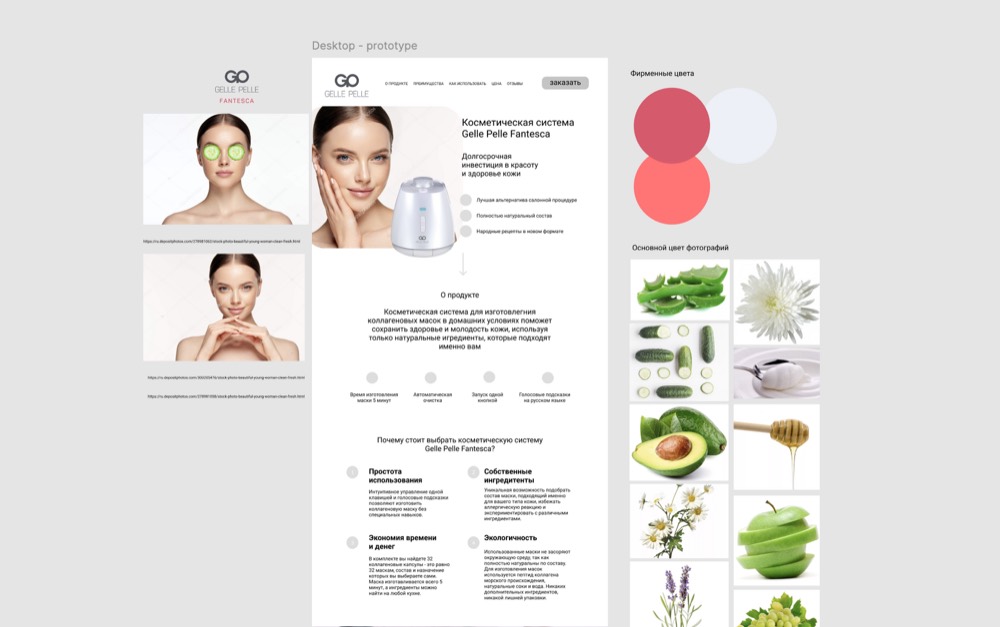
First came a prototype with the structure, colours and photo palette. Next to the published page you can see where the plan met reality.
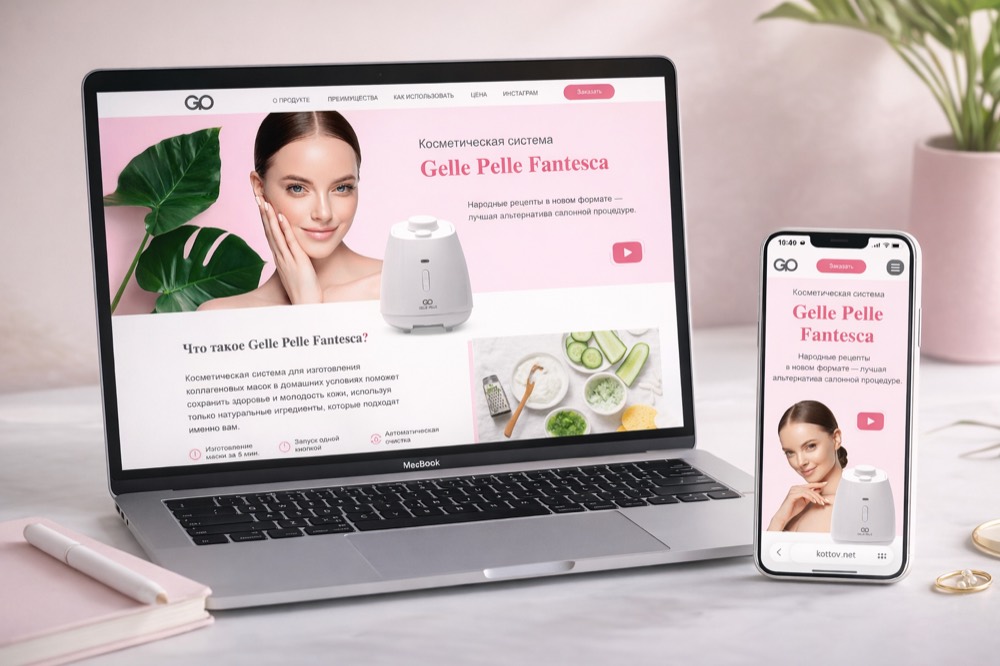
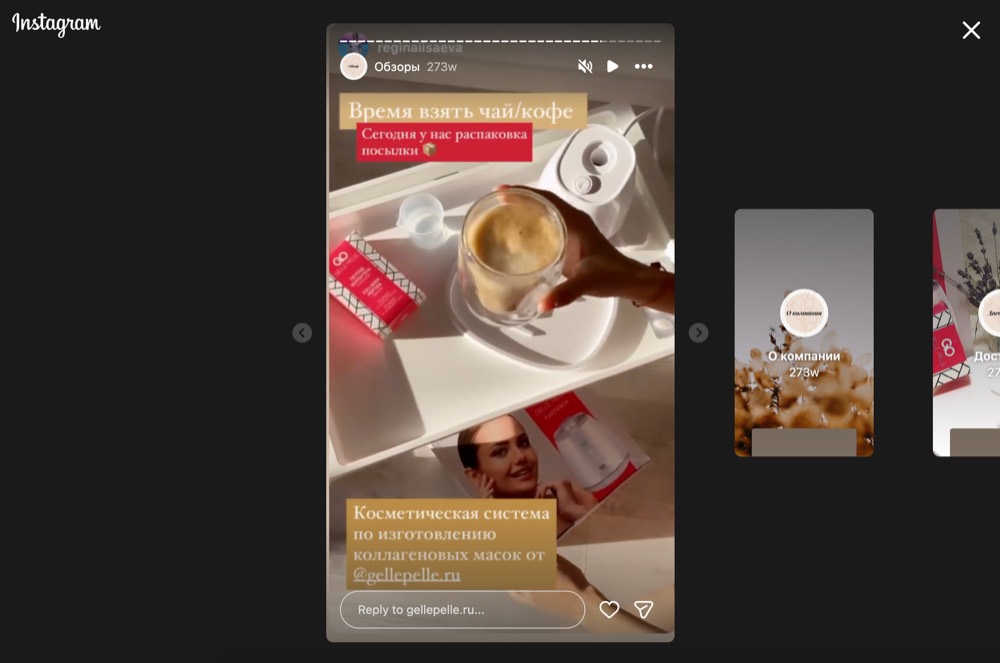
The published landing page · the prototype with a photo palette of juices, oils and herbs · the Instagram profile.
First-screen headline
A long-term investment in beauty
→Home remedies in a new format — the best alternative to a salon treatment
A product with no category has nothing to back up the word “investment”. So I placed the unfamiliar thing between two familiar ones: home remedies and a salon treatment.
Fifth menu item
Reviews→Instagram
There were no reviews and nowhere for them to come from. A live feed — unboxings, pinned stories — doesn’t replace them, but it shows there are real people behind the box.
06 · Outcome
People bought a device they’d never seen: first sales came before any further investment
The signal the MVP was built for: first paid orders for an unknown device at full price. The ads brought people in; they decided whether to buy on the page. Once the first sales started, I handed over the materials and the working funnel and left the project.
3–8 July 2020Landing page built
Summer 2020First sales; project handed over
2021–2023The domain lives on in the web archive
TodayDomain gone, copy kept
The product was later shut down. I don’t know why: by then I was no longer on the project.
Five answers in a row, not a page about a product. The bet was on words and trust, not pictures.
What I’d fix today
The same question twice
“When to start using collagen care” appears in the FAQ twice. By day six my proofreading had slipped — better I say so myself.
A feed instead of reviews
The right move is to collect honest reviews from the first buyers and add them to the page. The project never got there: I left before that.
No impact figures
Nobody measured the page’s conversion separately from the ads. This case shows a method, not results: how to break down a product that has no category.
Every number comes from the copy of the landing page on this site — portfolio/gp. I counted the six days, 148 timestamps and 50 blocks from the Tilda markup, the 22 cities from the service centre register and the roughly 900 words from the page text, excluding the register. The prototype, mockup and Instagram screenshot come from my portfolio. ChatGPT was released on 30 November 2022. The gellepelle.ru domain is down; web archive snapshots run from December 2021 to February 2023. This case has no advertising data: colleagues ran the ads.