Back to cases
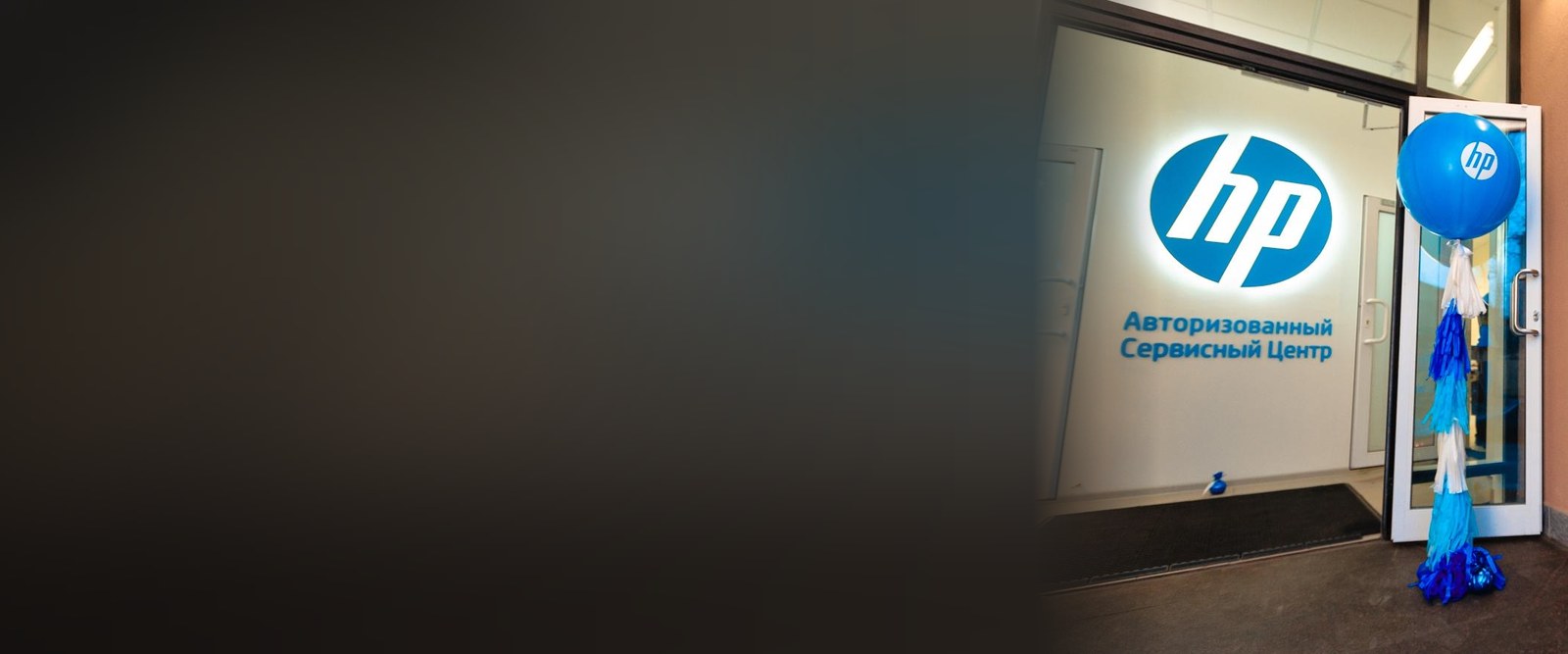
The entrance to a service center on opening day: a backlit HP Authorised Service Center sign on the glass and a blue balloon with the HP logo by the open door
HP authorised service network · 2013—2018

A hundred and two service centers, seven of them ours

The network grew not by opening its own centers but by connecting other people's. I was given the mechanics: how a request finds the right center, and how that center runs it and gets paid.

102
service centers in 55 cities and 11 time zones, 2018
×2
network growth in three years: 50 centers in 2015, 102 in 2018
7
cities with our own centers, the rest are connected partners
>1500
repairs a month across the network

A historical case: rus.support is a different business today. The shop window is reconstructed from the 2015—2020 web archive and press releases, the back end from my own account.

NetworkRUS.SUPPORT, an authorised HP Inc. and HPE network
Built byThe integrator KOMPLIT together with the vendor
EquipmentHP, HPE and Samsung — from a laptop to a server
My roleAdvertising and openings, then product. Wrote no code
01 · Openings

First I ordered signs, and the vendor came to inspect

From May 2013 I owned the visible side of openings: outdoor ads, print, halls, press. And the sign — from scratch in every new city.
Layoutbrand mark
Vendorapproves the mark
Citysign permit
Productionsize, lighting
Installationlit by ribbon-cutting
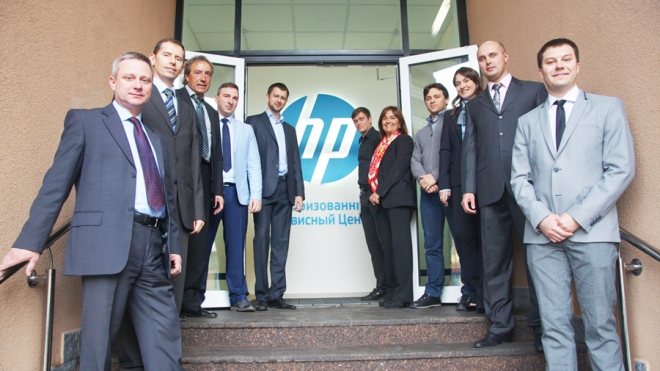
Thirteen people on the porch of a service center by a glass door carrying an HP Authorised Service Center logo
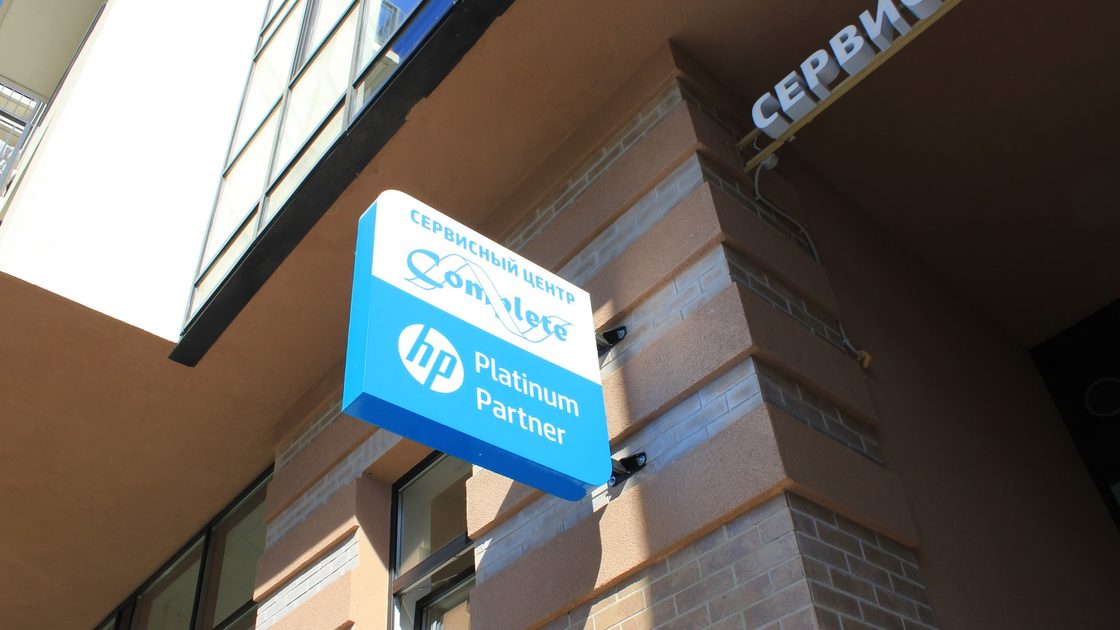
A projecting sign on the façade: Complete Service Center and a blue panel with the HP Platinum Partner status
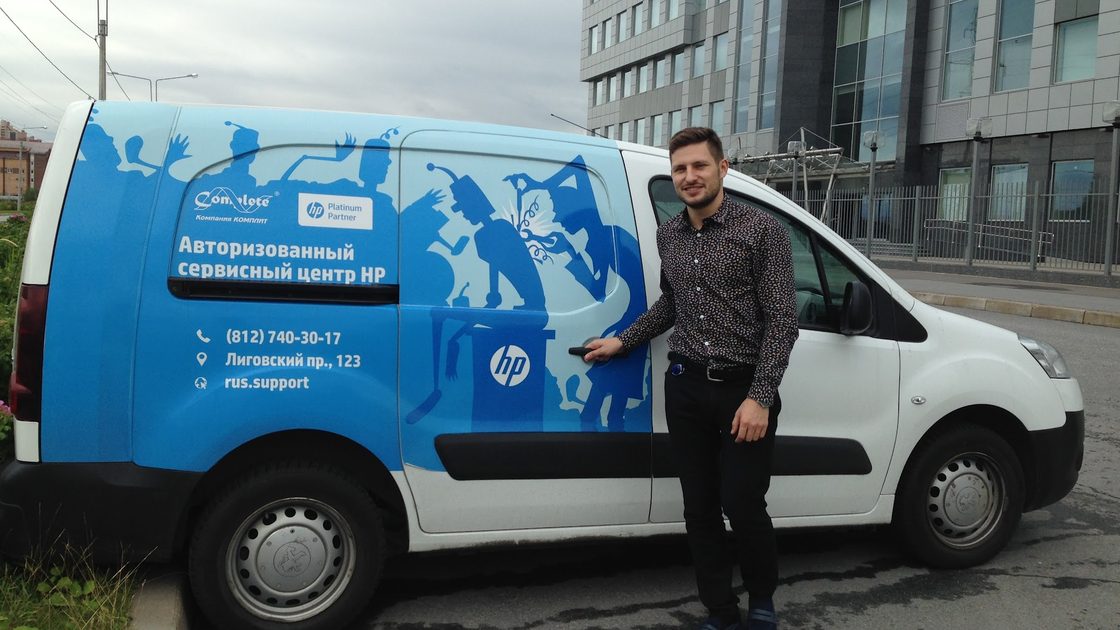
A branded van for on-site service: the words HP Authorised Service Center, the Ligovsky Prospekt address and the rus.support web address along its side

The HP delegation on the steps of the St Petersburg center on 16 April 2015, the sign with HP Platinum Partner status and the side of a field-service van — one set of graphics on every surface.

What the HP delegation checked in St Petersburg
  • repair times
  • repair quality
  • engineer qualifications
A European delegation led by Montse Serra. Authorisation is not granted for good — centers get inspected.
Cities of our own
7
Krasnodar, Sochi, Rostov-on-Don, Simferopol, St Petersburg, Moscow, Samara. The own network stopped at seven.
Oct 2013Rostov-on-Don: HP's top people in Russia, coverage on Rossiya 1
Sep 2014Simferopol: a center and a company branch
Apr 2015St Petersburg: the first single-brand center in the city
Aug 2015Sochi moves downtown, 50 centers in the network
2017 results'Discovery of the year' at HP MPS Club
02 · The idea

What scaled was not the workshops but the authorisation

Independent repair shops across the country had premises, people and skilled hands. What they lacked was HP status: the vendor's requirements are expensive to maintain. The head of the service department proposed a trade.

Two ways to grow by one location
Open our own
  • premises and people
  • spare parts stock
  • engineer training
  • vendor audit
  • a year of time
→
Connect someone else's
  • premises and hands already there
  • the network gives status and a standard
  • the network gives a flow of requests
  • the partner gives a pin on the map
  • growth not paid with our money
I was given the 'how'
  • how a person in Magadan learns there is a network center nearby
  • how a request reaches a specific partner
  • how the partner runs it and gets paid
03 · Three axes

A request has to match on three axes at once

A person knows their city and their broken box. They don't know the words 'authorised service partner'.

Axis 1 · Vendor and hardware
3
vendors and 11 equipment categories. A center is not authorised for everything: some fix HP printers but don't touch HPE servers.
Axis 2 · Geography
55
cities in 11 time zones. The nearest center is often not in your own city — hence search by radius.
Axis 3 · Service level
12
services: from warranty repair of a home printer to a 24×7 on-call shift for servers. Different centers, different contracts.
All three axes in full, from the archived site map

Vendor and equipment

  • HP Inc.: computing and printing equipment, commercial and home lines
  • Wide-format printing DesignJet and PageWide XL
  • POS terminals for retail points
  • Cost-per-page contracts, MPS
  • Hewlett Packard Enterprise: servers, storage, networking, 24×7 support
  • Samsung: printing equipment

Geography

  • 55 cities, 11 time zones
  • Radius search from 20 km
  • Geolocation lookup
  • A map pinned with every center
  • Own centers in seven cities plus regional partners
  • A city email address for every location

Service level

  • Repair: warranty, paid, on-site for printing equipment
  • Original spare parts, warranty extension
  • Contracts: service, HP Care Pack, HP Proactive Care, pay-per-page printing
  • Infrastructure: monitoring, installation, upgrades, migration, outsourcing and outstaffing
04 · Shop window

The catalogue is what is left after routing

The May 2018 landing page — my last year at the company and the product's final state. It scrolls inside the screen.
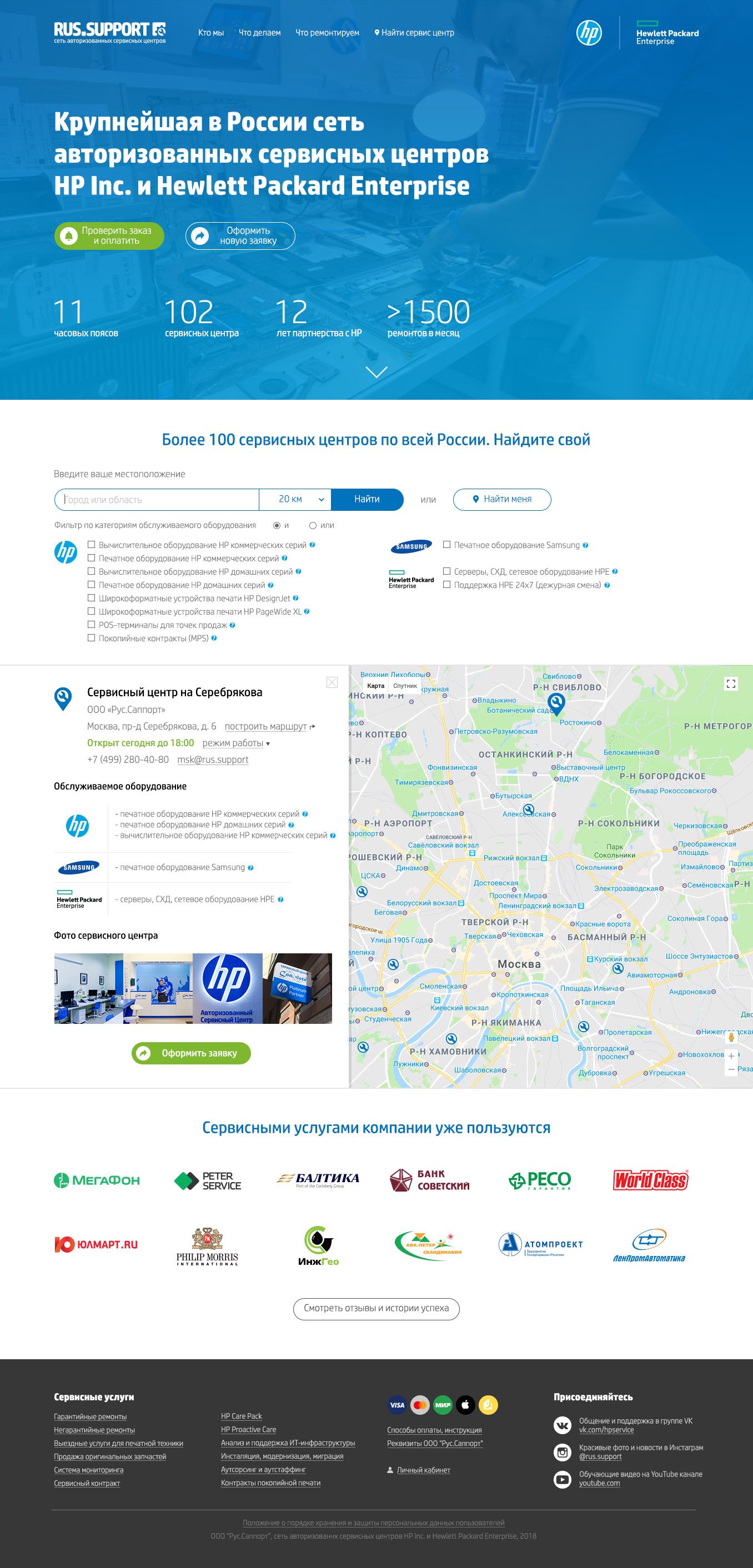
The complete rus.support landing page as of May 2018: the hero with its headline and strip of four numbers, the center search block with a radius and a filter by hardware category, a service center card with a map, customer logos and the footer with the list of services
A screenshot from my portfolio: the web archive kept this version only partially. The four numbers on the first screen — 11, 102, 12, >1500 — appear there exactly like this.
The first button is for the returning customer
1Check order and pay2Submit a new request
A service's main traffic is people who have already handed in equipment and are waiting for status and a bill. Hide their path and they will find it by phone.
The Boolean operator goes to the user
  • And — for a company: a center that fixes both the printer and the server
  • Or — at home: any center that fixes printers
A filter across 11 equipment categories, a city with a radius from 20 km and 'find me' by geolocation.
Not a timetable but an answer
Open today
until 18:00
Opening hours sit underneath and expand. A person holding a box has one question: will I make it now?
Where to find the serial number
8
help pages: back bottom, side of the chassis, by the cartridge. No serial number, no request — so this is part of the funnel, not an appendix.
05 · The other side

Status on the sign is worth nothing without a flow of requests

For a partner, the mechanics were what joining actually meant. I built them with the developers: described the logic, set the tasks, sorted out the integrations.

City and equipmentall the customer enters
A specific centernot a shared inbox
Acceptedthe center confirms
Status on the sitein progress, ready
Card paymentbefore picking up the device
Online payment: took the longest
  • a bank contract and requirements for the site
  • test environment, refunds, reconciliation
  • one center does the repair, while the network's legal entity takes the payment
I ran it on the client side: requirements, development tasks, the bank integration — until payments went through end to end.
A 2015 promise
The press release on the St Petersburg opening: customers will be able to check whether their equipment is ready and pay for services on the site.
Three years later the landing page has a pay button, a customer account and Visa, Mastercard, MIR, Apple Pay in the footer.

The back end never made it into the web archive. Everything in this act, apart from the traces on the site and the press release, is my own account.

06 · Growth

The network doubled without a single new center of our own

'50' and '100+' in my CV turned out to be two dates, not a mix-up. Both points are backed by archived snapshots.

Centers in the network
Own cities over five years
7→7
The hundred came from connections. Our own centers are inside it, not on top.
Cities in the location picker
47—55
from 2015 to 2018. The network grew in density, not just on the map.
07 · Ending

The model outlived its author. The network did not

What follows happened without me, but the case would be dishonest without it.

Dec 2020120 centers, over 2,000 requests a month. The platform was rewritten, the first screen and radius search were kept
Oct 2023The map registry lists 15 centers: 4 own and 11 partner
2024—2025The home page still says 'over 100 service centers'
Sep 2025The site is rebuilt for print outsourcing, HP is gone from the positioning

The brief was about a catalogue of service centers. The job turned out to be about routing requests — and the whole product is built around that correction.

The case has no result in money: no data from that era survived, and I won't fill it in after the fact.

My part
Openings

Outdoor ads and signs approved by the vendor and the city, halls and stands, print, regional press.

The product

Routing across three axes, user scenarios, prototypes, development requirements, the 2018 landing page, the RUS.SUPPORT logo.

The other side

Request intake by connected centers, repair statuses on the site, online payment and the bank integration.

Product logicRequest routingInformation architectureInterface prototypesOnline paymentPartner networkVendor standardOutdoor advertisingRebranding
This case is reconstructed from the network site's web archive for 2015—2020, press releases about center openings and a screenshot of the May 2018 landing page from my portfolio. There is one living source — a film about the network on the company channel, October 2015. The figures of 102 centers, 55 cities, 11 time zones and over 1,500 repairs a month are from the landing page without recalculation; 50 centers in 2015 and 120 in 2020 come from archived snapshots of the home page. The centers' internal system and the bank work are described from my own account.

← Back to all cases