
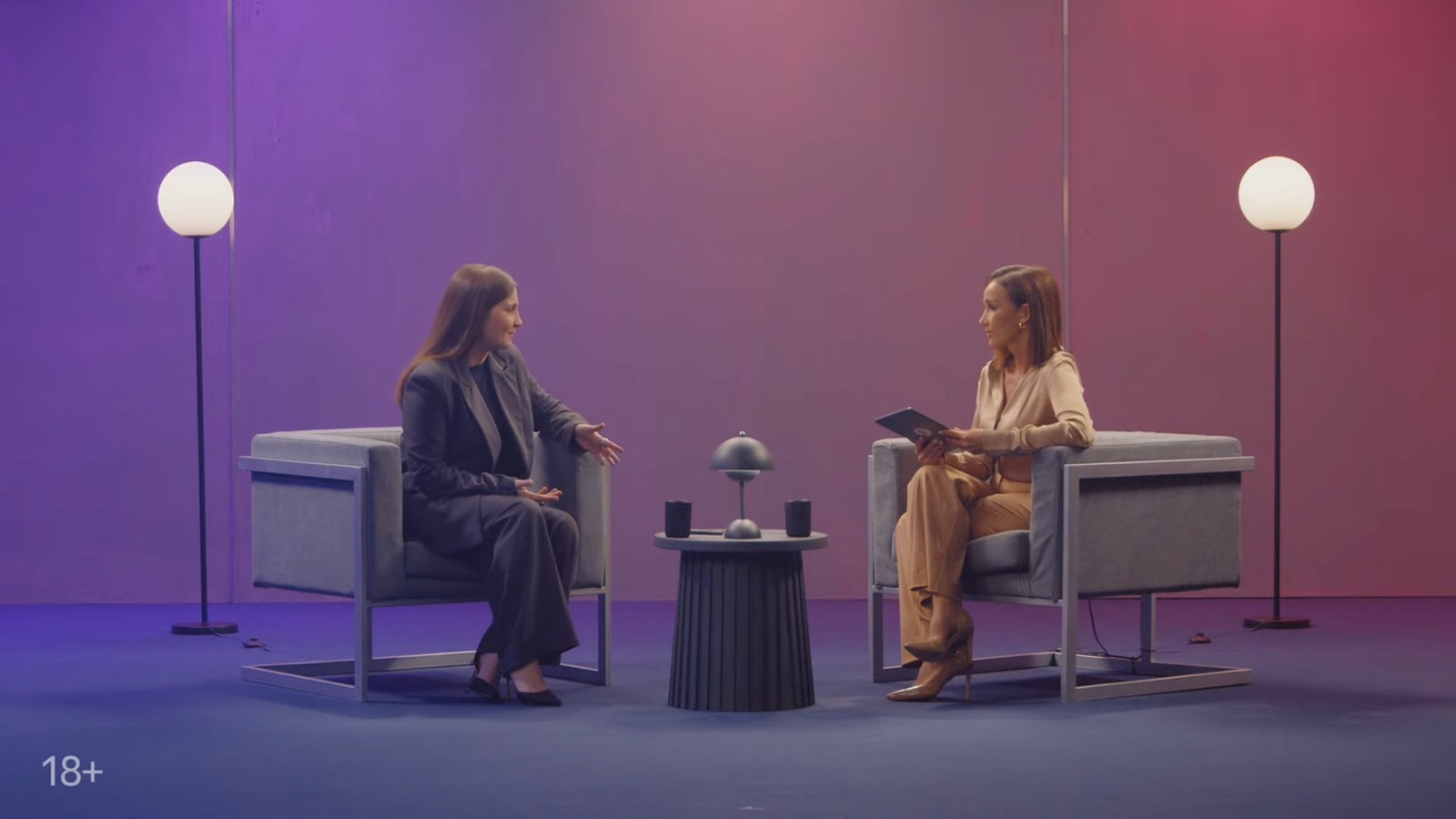
How demand was mapped in a category nobody talks about
The opening talk of a conference on adult products. Search data was not enough, and the survey team turned me down first.
A breakdown of the method, not the findings: the market figures belong to Yandex. Slides come from the public recording of the talk.
Here search data is precise about products and tactless about people
An ordinary brief: what demand looks like, who buys, what an advertiser should do. The category was not ordinary.
Three sources: each covers the blind spot of the other two
Search tells you what people look for. It does not tell you why they hesitate, where they buy, or what would make them buy more.
- size and structure of the category
- seasonality
- motive and barrier
- what the category may not say
- what to stop trying
- anything about buyers
- motive and barrier
- purchase channel
- willingness to talk
- market size in money
I answered “no” with a finished questionnaire — the next day
The survey team said no: the request was too big, the deadline too short. Instead of escalating, I came back with specifics.
- “we need a survey on the category”
- scope of work unclear
- answer: no
- a finished questionnaire on my own account
- cost, fieldwork dates, reach
- answer: they joined in
Embarrassment was not asked about head-on
Asked directly, nobody admits to being embarrassed. People name a general taboo readily, as long as it is not about them.
Asked only of those who had bought before.
Asked only of those who had not bought yet but planned to.
The precise slide came off the stage. The conclusion stayed
The deck had a search cut: which gender and age searches for which product. I proposed replacing it with survey data.
- gender × age × specific product
- real data, nothing to fault
- from a stage — indelicate
- people said themselves what they buy
- in general terms, with no item-by-item split
- two weeks later the PR review asked for exactly this
The detailed split was not deleted: precision for those who need it, restraint for the stage.
The talk opened the conference, and the recording is still being watched
 Watch the talk on YouTube
The video is 18+ — YouTube will ask you to confirm your age
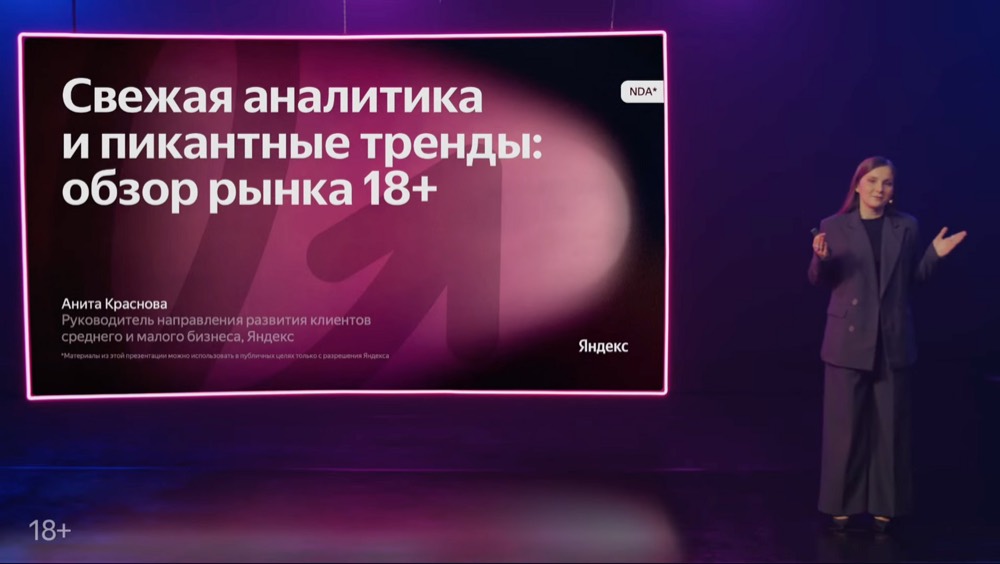
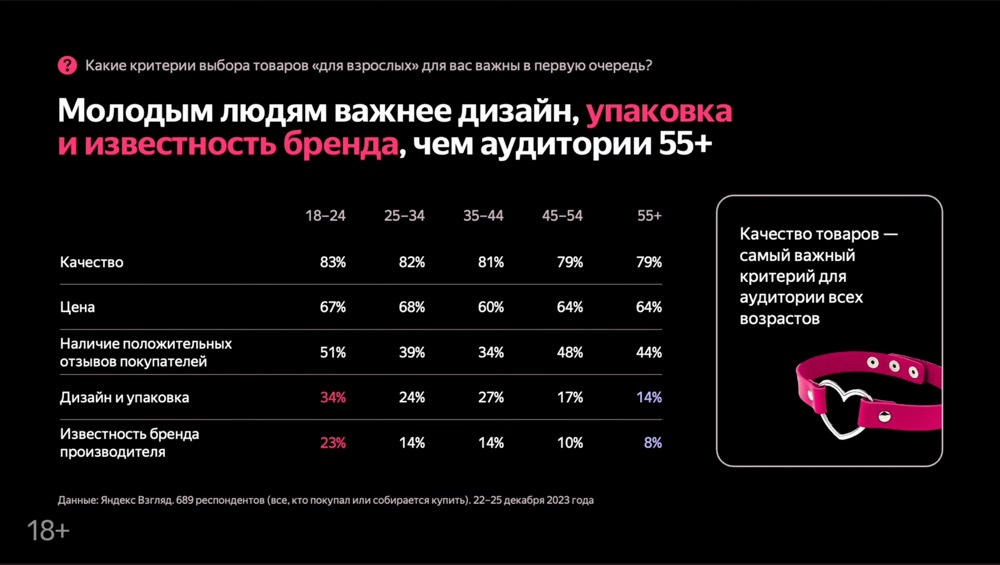
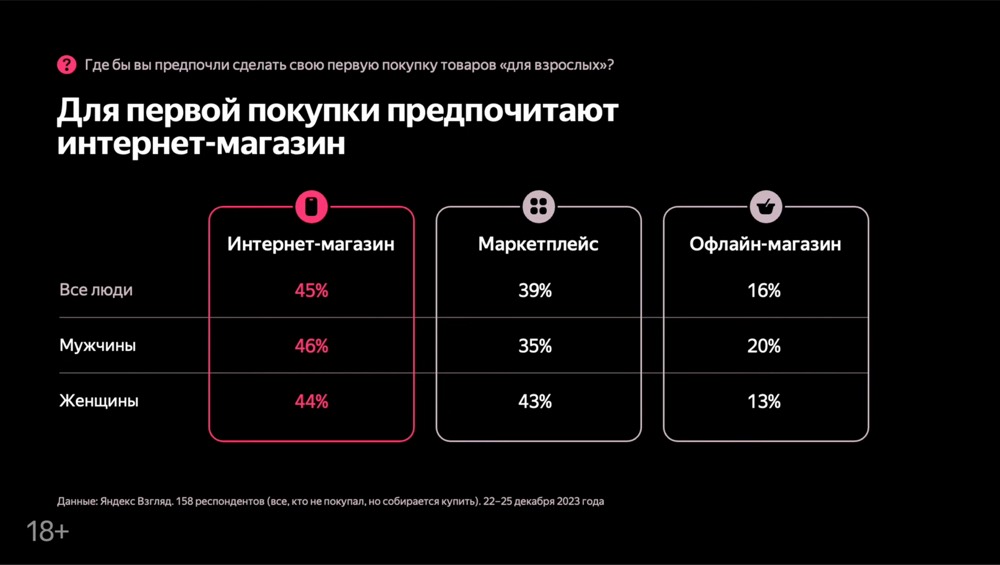
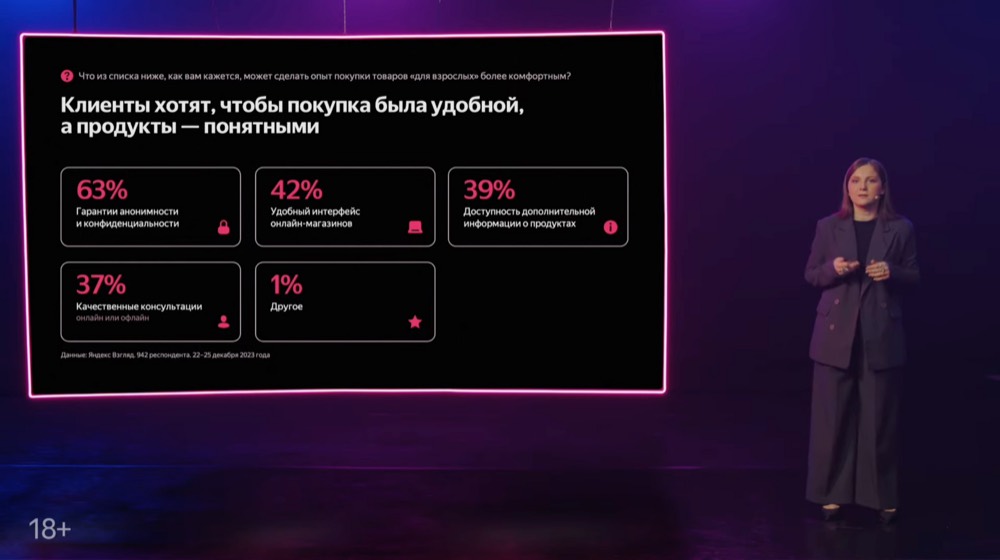
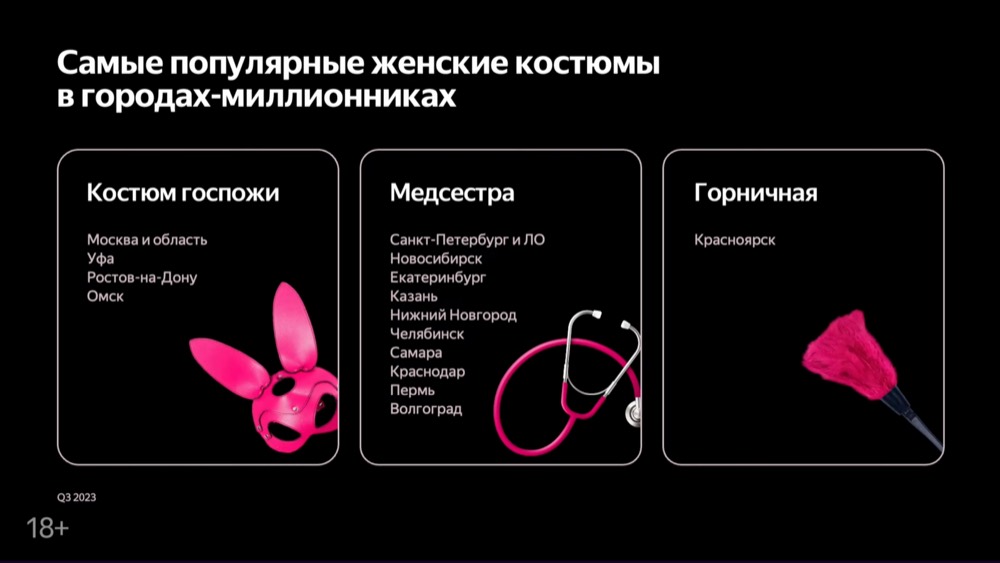
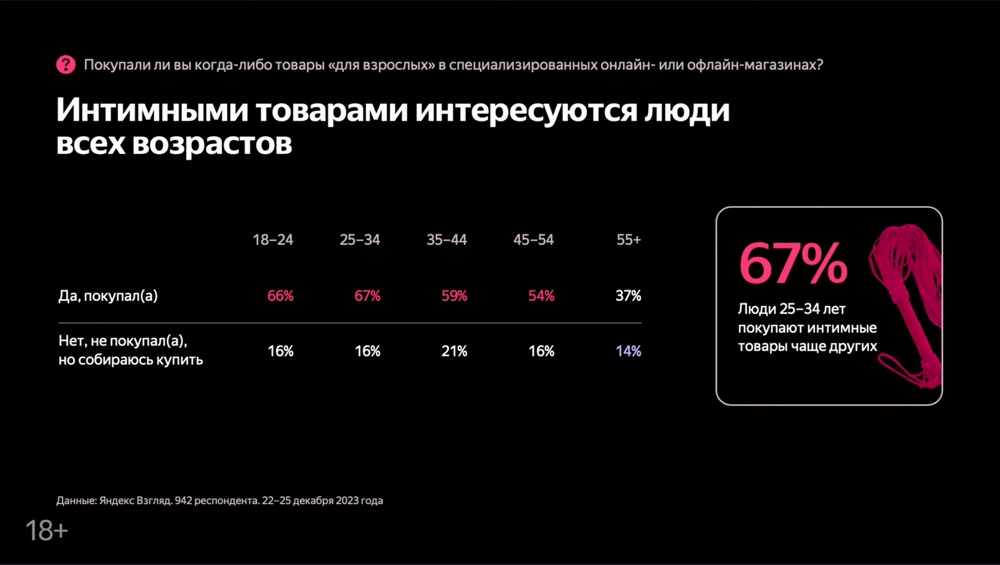
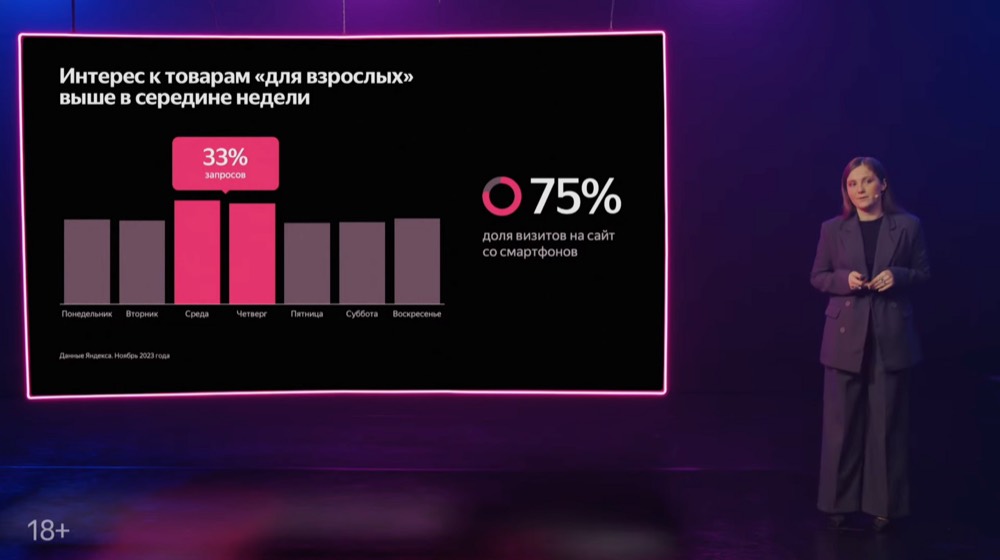
Eight slides from the deck. I assembled the deck; the design team styled it.
In a sensitive category, accuracy and fitness for the stage are two different exams. Passing the first does not mean passing the second.
The questionnaire after the refusal, fieldwork, cleaning the sample down to 942 answers.
What moderation rejects and why — the practical part of the talk.
Data from three sources turned into the speaker's slides; the indelicate cut replaced.
What I would do differently
The second-by-second curve sits with the channel owner. I should have asked while anyone still cared.
A spare week would have allowed a pilot of the barrier question wording, and everything else depended on it.
Rebuilding this page took a day of digging through two-year-old correspondence.
Conference page → · ← Back to cases